

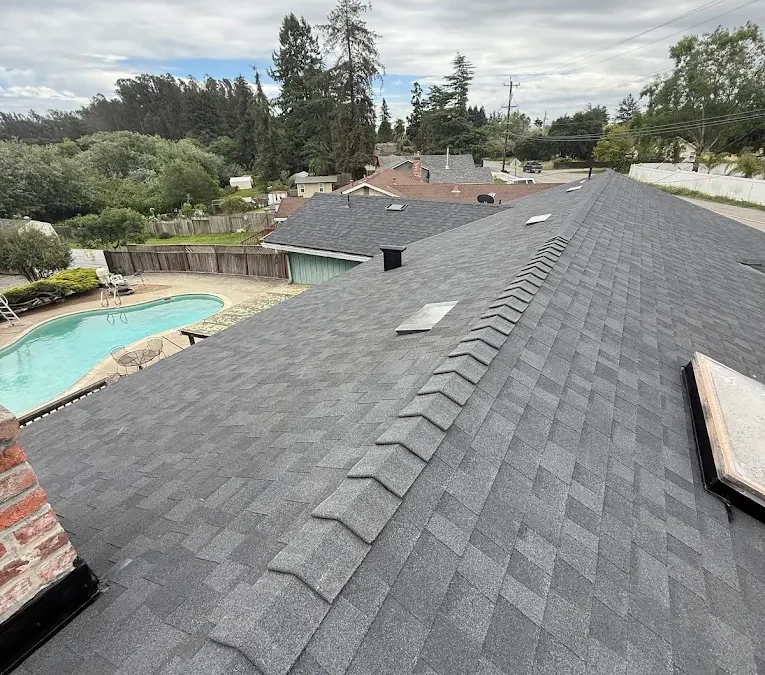
A professional roof inspection in Capitola gives you time to understand your roof’s condition before your homeowners insurance policy renews. It can help you document maintenance, complete necessary repairs, and respond if your insurance company raises concerns about visible wear or damage.
An inspection cannot guarantee that your insurer will renew your coverage. However, a recent report with photographs and repair records gives you stronger information than relying only on aerial images or an older roof-age estimate.
Redwood Roofing works with Capitola homeowners who want to address roofing concerns before they become last-minute insurance or repair problems.
Why Your Roof May Be Reviewed Before Renewal
Insurance companies may review your roof because its condition affects the likelihood and potential cost of a future claim. Some insurers use aerial photographs, satellite images, property records, and other tools to identify roofs that appear worn, damaged, or poorly maintained.
These images may show:
- Missing or lifted shingles
- Heavy moss or debris
- Staining and discoloration
- Uneven or sagging roof areas
- Visible patching
- Worn roofing materials
Remote images can provide useful information, but they do not always tell the full story. They may not show whether the attic is dry, flashing remains secure, ventilation is working, or previous repairs were completed correctly.
A professional roof inspection in Capitola provides an on-site assessment of the roof’s current condition. If an insurer asks questions, you may be able to provide the report, photographs, invoices, or proof of completed maintenance.
Cancellation and Nonrenewal Are Not the Same
A cancellation ends an insurance policy before its scheduled expiration date, while a nonrenewal means the insurer does not continue the policy for another term. Understanding the difference helps you respond correctly to any notice you receive.
California limits when an insurer can cancel an established homeowners policy. Nonrenewal decisions follow different rules and generally take effect when the current policy term ends.
If you receive a notice:
- Read the reason carefully.
- Check the response deadline and expiration date.
- Contact your insurance agent or carrier.
- Ask what documentation or corrective work is required.
- Schedule an inspection as soon as possible.
The California Department of Insurance provides additional information about residential cancellations and nonrenewals in its consumer guidance.
What a Professional Roof Inspection Covers
A complete inspection examines the roof as a system, including its surface materials, drainage, penetrations, ventilation, and accessible structural areas. The goal is to identify active damage, developing problems, and routine maintenance needs.
| Inspection Area | What We Look For | Why It Matters |
| Roof covering | Cracked, curled, loose, missing, or worn materials | Damaged materials may allow water to enter |
| Flashing | Gaps or deterioration near vents, skylights, chimneys, walls, and valleys | Flashing failures are a common source of leaks |
| Gutters and drainage | Blockages, loose sections, corrosion, and poor water flow | Overflow can damage roofing edges, fascia, and siding |
| Moss and debris | Moss, leaves, branches, and moisture-trapping buildup | Organic growth can hold water against the roof |
| Roof structure | Sagging, movement, soft areas, or damaged decking | These signs may indicate a larger structural concern |
| Attic areas | Stains, moisture, mold-like growth, or daylight entering through gaps | Attic conditions may reveal hidden roof leaks |
| Ventilation | Blocked intake or exhaust vents and moisture buildup | Poor airflow can shorten material life |
| Previous repairs | Failed sealants, mismatched materials, or weak patches | Temporary repairs may not provide lasting protection |
A useful inspection report should clearly separate immediate problems from maintenance recommendations. It should also include photographs so you can understand what was found and share relevant documentation with your insurer if requested.
Why Capitola’s Coastal Climate Matters
Capitola roofs face moisture, marine air, wind-driven rain, winter storms, and shaded conditions that can encourage moss growth. These conditions can expose weak areas and accelerate wear on roofing materials and metal components.
Salt and moisture may contribute to corrosion around flashing, fasteners, gutters, and roof penetrations. Persistent dampness can also affect sealants and allow moss or debris to hold water against the roofing surface.
Common coastal roof concerns include:
- Moss growing in shaded areas
- Corroded flashing or metal components
- Loose materials after strong winds
- Clogged gutters and drainage problems
- Moisture entering around vents and skylights
- Worn sealants
- Attic condensation caused by poor ventilation
Our guide to coastal roofing challenges in Capitola explains how local weather and marine conditions affect residential roofs.
When to Schedule an Inspection
Try to schedule your inspection 60 to 90 days before your policy renewal date. This gives you time to review the findings, complete reasonable repairs, and send documentation before an insurer’s deadline.
Use this pre-renewal timeline:
- Find your renewal date. Check the declarations page of your insurance policy.
- Contact your agent. Ask whether the insurer requires photographs, inspection reports, invoices, permits, or proof of repairs.
- Schedule the inspection. Avoid waiting until the final weeks before expiration.
- Review the report. Identify urgent defects, maintenance items, and longer-term concerns.
- Complete necessary work. Small defects may be addressed through professional roof repair services.
- Save your records. Keep inspection reports, before-and-after photographs, invoices, warranties, and insurer correspondence.
You should also consider an inspection after a major storm, falling branches, visible material loss, or signs of an interior leak.
Regular inspections may help you catch smaller defects before they spread. Learn more about how professional roof inspection services can save money over time.
What to Do If Your Insurer Flags the Roof
Ask the insurer to explain the exact issue and what documentation or corrective work it will accept. Do not assume that a complete replacement is required until you understand the reason for the underwriting concern.
Take these steps:
- Request available images, notes, or inspection details.
- Compare the insurer’s concern with a current professional inspection.
- Ask your contractor to explain whether the issue requires maintenance, repair, or replacement.
- Photograph completed work.
- Submit the requested documents before the deadline.
- Keep written records of every conversation and submission.
A contractor should not promise that a report or repair will guarantee renewal. The insurer makes the final underwriting decision, but accurate documentation may help you request reconsideration or show that an identified issue has been addressed.
How Actual Cash Value Coverage May Affect Roof Claims
Some insurance policies use Actual Cash Value, or ACV, when calculating roof-damage payments. ACV generally accounts for depreciation, while replacement-cost coverage may pay toward new materials of similar quality, subject to policy terms, deductibles, and limits.
In 2026, the Federal Housing Finance Agency announced that Fannie Mae and Freddie Mac could accept ACV roof coverage for certain eligible properties. This does not automatically change your current policy.
Review your declarations page and ask your insurance agent how roof losses are valued under your coverage. An inspection does not change the policy, but it helps you understand the condition of an asset that may have a depreciated claim value.
Repair or Replace After the Inspection?
Localized defects can often be repaired, while widespread deterioration may make replacement more practical. The inspection should help you compare the roof’s remaining service life, current damage, repair history, and expected cost.
A repair may be appropriate when you have:
- A small flashing failure
- Limited storm damage
- A few missing or damaged shingles
- A localized leak
- Minor gutter or drainage problems
A roof replacement may be recommended when damage is widespread, the roof has repeated leaks, decking is deteriorated, or repairs would only provide a short-term solution.
Major roofing work may require permits and inspections. For a property within Capitola city limits, your contractor should confirm current requirements with the City of Capitola before work begins.
When comparing contractors, review licensing, insurance, written scopes, material specifications, warranties, and permit responsibilities. Our guide to choosing a roofing company in Capitola includes additional questions to ask.
Why Work With a Local Capitola Roofing Contractor?
A local contractor understands the weather patterns, roof materials, permitting requirements, and maintenance problems commonly found near Monterey Bay. That local experience helps the contractor recognize concerns that may develop differently than they would in a dry inland climate.
Redwood Roofing is a family-operated company founded in Santa Cruz in 2016. We serve homeowners in Capitola and surrounding communities with roof inspections, repairs, installations, and replacements.
When we inspect your roof, we explain what we find in straightforward language. You receive practical recommendations based on the roof’s actual condition instead of pressure to purchase work that may not be necessary.
Schedule a Roof Inspection Before Your Renewal
You should know what condition your roof is in before an insurance company raises a concern. Scheduling early gives you time to understand the findings, complete necessary work, and organize the documents your insurer may request.
Call Redwood Roofing at (831) 888-7790 to schedule a professional roof inspection in Capitola. We will inspect your roof, explain what we find, and help you plan the next step without unnecessary pressure.
FAQs About Roof Inspections
1. How often should Capitola homeowners schedule a roof inspection?
An annual inspection is a practical choice for many coastal homes. You may need an additional inspection after severe wind, a major storm, falling branches, or visible roof damage.
2. Can an inspection report stop an insurance nonrenewal?
An inspection report cannot guarantee renewal. However, a current report, photographs, and proof of completed repairs may help you respond to an underwriting concern or request another review.
3. What is the difference between an inspection and a repair?
An inspection identifies and documents the roof’s condition. A repair corrects a specific problem found during the inspection, such as failed flashing or damaged shingles.
4. Does a roof inspection require a permit?
A standard visual roof inspection generally does not require a building permit. Repairs, re-roofing, and replacement work may require permits depending on the scope.
5. What happens if the inspector finds major damage?
Your contractor should show you photographs, explain the problem, and provide repair or replacement options. You can then compare safety, cost, remaining roof life, and long-term value.