

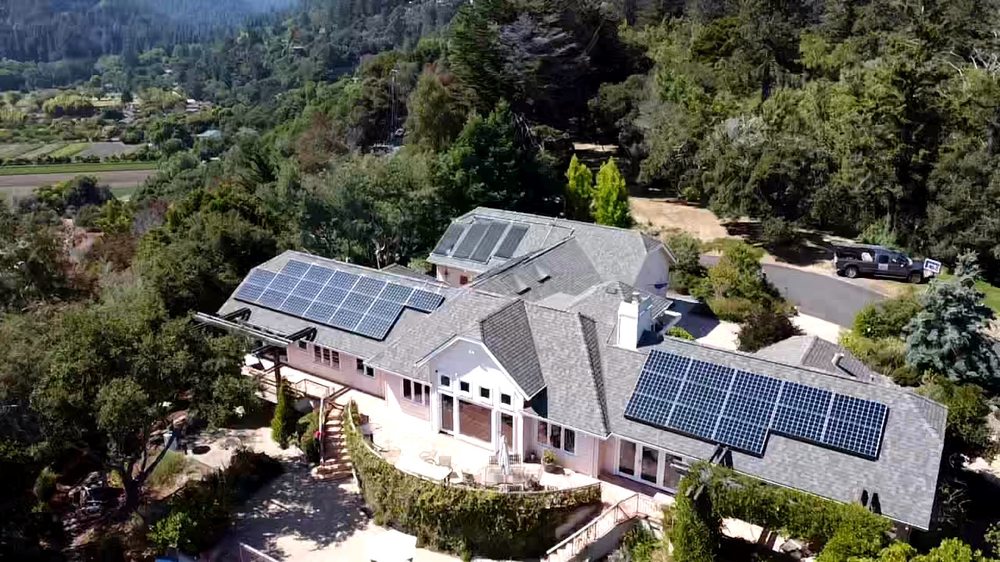
If your roof has fewer than 10 to 15 years of life left, replace it before you install solar panels. That one decision can save you thousands of dollars and a lot of headaches down the road.
Solar panels are built to outlast most roofing systems. So when your roof gives out underneath an array, you pay a crew to take every panel down, pay a roofer to redo the roof, and then pay again to put the panels back up. You end up paying twice for work you could have done once.
Fortunately, this is easy to avoid. You just need to know the real condition of your roof before your solar project starts.
Should You Replace Your Roof Before Solar?
Replace your roof if your current one has fewer than 10 to 15 years of useful life left. That is the standard most roofing and solar pros follow, and it holds up especially well along the coast.
The threshold exists for a few practical reasons:
- Panels Outlive Roofs: The U.S. Department of Energy reports an average operational lifespan of 25 to 35 years for modern solar panels.
- Expensive Access: Nobody can touch your decking until the array comes off.
- Leaks Hide Longer: Water under a panel array is harder to spot and harder to reach.
- Insurers are Paying Attention: Many carriers now want a sound roof beneath a solar system.
That said, you cannot judge remaining roof life from the driveway. A professional roof inspection is the only reliable way to see where your roof actually stands. Once you have that report in hand, the decision usually makes itself.
What Skipping the Right Order Actually Costs
Removing and reinstalling solar panels for a roof replacement averages about $3,800, with most projects landing between $2,800 and $4,800, according to cost data from Fixr. That is money you spend on top of the roof itself.
Here is how the two paths compare:
| Your Approach | What You End Up Paying |
| Roof first, then solar | One roof replacement, one solar install |
| Solar first, roof in 6 years | One roof replacement, one solar install, plus $2,800 to $4,800 for detach and reset, plus lost power production while the panels sit in a garage |
Larger arrays push that number higher. In addition, if you lease your panels or have a power purchase agreement, your solar provider has to approve the work before anyone touches the system. That approval can add weeks to your timeline.
For a closer look at local pricing, our breakdown of roof replacement costs in Santa Cruz County explains what actually drives the number.
How Capitola’s Coastal Climate Speeds Things Up
Coastal roofs age faster than inland roofs, which makes that 10 to 15 year rule even more important here. Marine fog, salt air, and redwood debris damage your roofing materials all year long.
Here is what we typically find on Capitola roofs:
- Moss and algae in shaded areas where fog lingers
- Corroded flashing around chimneys, vents, and skylights
- Redwood needles packed into valleys, trapping water against the roof
- Soft decking where moisture has been sitting for seasons
- Lifted shingles along ridgelines from steady onshore wind
None of that is visible from the street, which is exactly the problem. For more on what the coast does to a roof over time, see our guide to coastal roofing challenges in Capitola.
September is also a smart month to act. Atmospheric rivers and heavy storms usually return by late fall, so an inspection now catches dry season damage before it becomes an emergency.
What Changed for Roofing in 2026
Two things shifted this year, and both affect your timing.
First, California’s 2025 Building Energy Efficiency Standards (Title 24, Part 6) took effect on January 1, 2026. Any permit filed on or after that date falls under the new code. Requirements for solar reflectance and thermal emittance vary by climate zone and roof slope, and coastal zones like ours are treated differently from hot inland zones. Even so, any cool roofing product used for compliance has to be rated and labeled by the Cool Roof Rating Council. Your roofer and the local building department can confirm exactly what applies at your address.
Second, the federal residential solar tax credit under Section 25D expired on December 31, 2025. Since that cushion is gone, an avoidable expense like a second roof project hits your budget harder than it would have a year ago.
If you are still weighing options, our guide to choosing roofing materials for Santa Cruz homes compares the most common choices side by side.
The Right Sequence, Step by Step
Follow these 5 steps, and you will only pay for the work once:
- Book a roof inspection. A qualified inspector checks remaining roof life, decking condition, flashing, valleys, and existing penetrations.
- Read the findings before you sign anything solar. If you have fewer than 10 to 15 years left, replacement comes first.
- Pick code-compliant materials. Confirm what Title 24 requires for your zone and slope, and aim for a Class A fire rating.
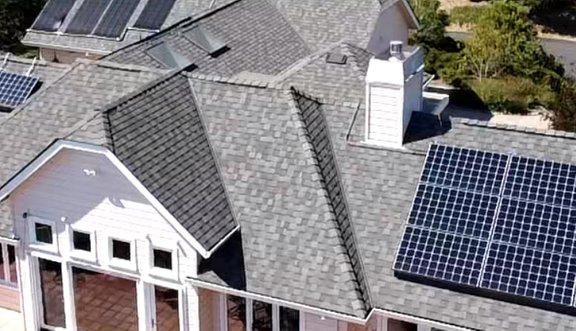
- Complete the roof replacement. Your roofer builds a clean, solid, solar-ready deck with properly sealed penetrations.
- Bring in your solar installer. Now the panels go onto a roof that will outlast them.
Fire Ratings and Your Insurance Policy
Upgrade to a Class A fire-rated assembly while the roof is already off. California Residential Code and Wildland-Urban Interface standards require Class A assemblies in fire-prone areas, and coastal redwood neighborhoods are not exempt during a dry summer.
Plenty of older homes around here still have untreated wood shakes that fall short of current standards. Because you are replacing the roof anyway, this is the cheapest moment you will ever get to switch to fire-resistant composite shingles, metal, or tile.
Insurance carriers are watching too. Fire ratings and roof age increasingly shape both your premium and whether you get renewed at all. We wrote more about that in our post on scheduling a roof inspection before insurance renewal.
Ready to Get Your Roof Solar-Ready?
Redwood Roofing has served Capitola, Santa Cruz, Los Gatos, San Jose, and the surrounding communities since 2016. We are family-owned, fully licensed and insured (CSLB Lic# 1019214), and backed by more than 130 five-star reviews.
Call (831) 888-7790 to schedule your roof inspection before the wet season arrives and before your solar project moves forward. You can also stop by our Capitola office at 1840 41st Ave STE 205.
FAQs About Replacing Your Roof Before Solar Installation
1. How do I know if my roof needs replacing before solar?
Get a professional inspection. An inspector evaluates age, decking integrity, flashing, and material condition, then estimates remaining life. Under 10 to 15 years means replace first.
2. What makes a roof solar-ready?
A sound deck, properly sealed penetrations, and materials that meet current Title 24 requirements for your climate zone and roof slope.
3. Does replacing the roof first cost more overall?
No. It costs more upfront, but it removes the $2,800 to $4,800 detach-and-reset expense plus lost production later. Over the full life of both systems, doing it once is almost always cheaper.
4. Can I install solar on a roof that is 12 years old?
Sometimes, but it depends on material and condition. A 12-year-old composite roof in coastal fog is a different situation than a 12-year-old metal roof. An inspection settles it.
5. Can Redwood Roofing coordinate with my solar installer?
Yes. We inspect, repair, and replace roofs with the full lifecycle of your home in mind, including solar projects already on your calendar.