

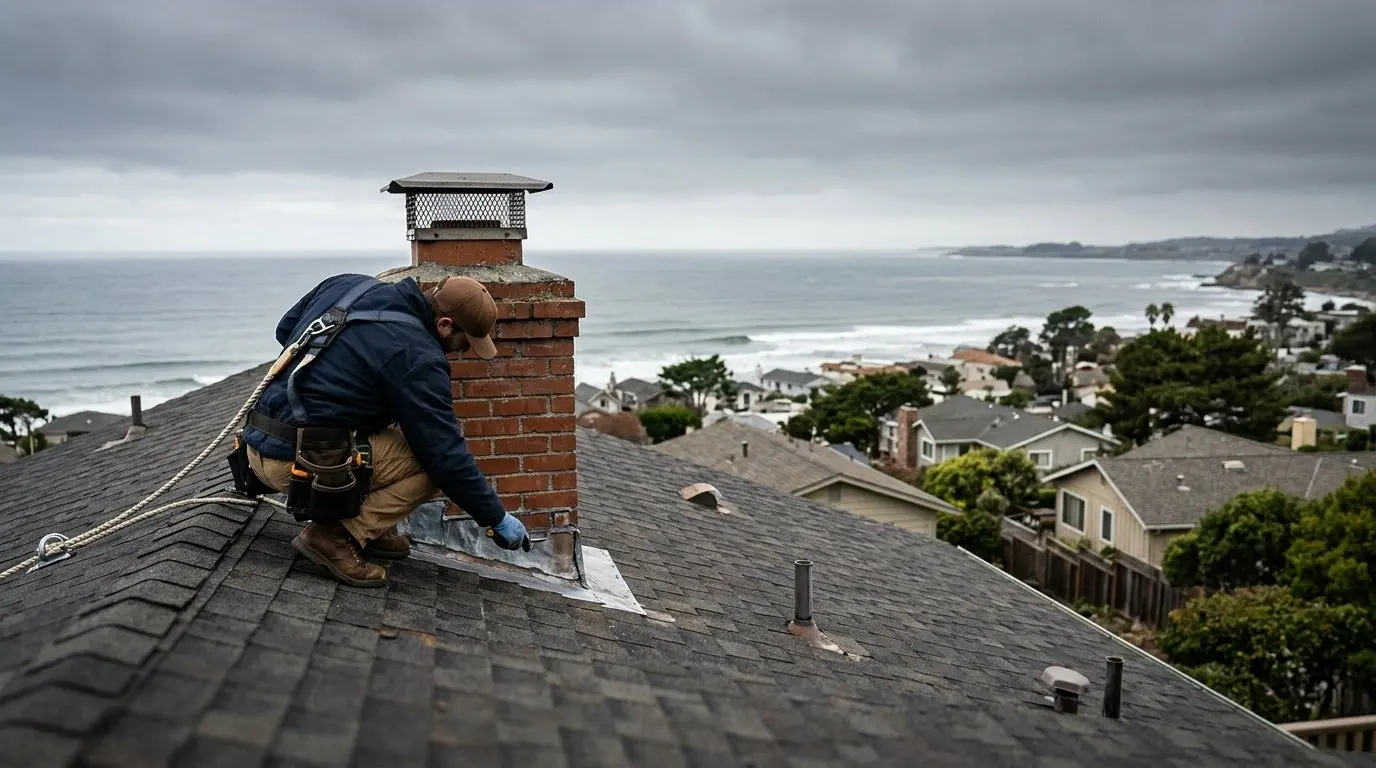
If your roof damage sits in one spot, the wood decking under it is still dry, and the roof has years of life left, a coastal roof repair is usually the right call. Once problems show up in several places at once, replacement is the better use of your money. Near the water, that line gets harder to see, because salt air wears down the metal parts of your roof long before your shingles start to look old.
Here is a simple way to think it through before the winter rain settles in.
Why Salt Air Changes the Repair Math
Salt air goes after metal first. That means the flashing, fasteners, and ridge caps on your Capitola home can fail years before the shingles around them do.
Ocean mist and fog drift in every day and settle into every seam on your roof. Over time, that moisture rusts nail heads and opens gaps where flashing meets a chimney or vent. You usually cannot see any of it from the ground, which is why a roof can look perfectly fine and still leak during the first real storm.
Age matters too. InterNACHI’s estimated life expectancy chart puts standard three-tab asphalt shingles at about 20 years and architectural shingles at about 30. Coastal homes tend to land at the low end of those ranges. If you want the bigger picture, we covered the main coastal roofing challenges that come with living near the bay in an earlier post.
Your Repair or Replace Checklist
Four things decide it: how far the damage spreads, how old your roof is, what shape the decking is in, and how the repair quote compares to a new roof. Here is how those usually line up.
| What you are looking at | Points to repair | Points to replacement |
| Damage area | One section or slope | A quarter or more of the roof |
| Roof age | Under 15 years | Near or past its expected life |
| Leaks | One leak in one spot | Leaks in different areas |
| Decking | Firm and dry | Soft, stained, or sagging |
| Repair cost | A small share of a new roof | Close to half the price of a new roof |
If most of your answers sit in the left column, a repair should hold up fine. If they lean right, patching becomes a short-term fix for a long-term problem.
When a Coastal Roof Repair Still Makes Sense
A repair is the right move when the damage is contained, and the structure underneath is sound. That usually looks like:
- A few shingles missing or cracked after a windy stretch
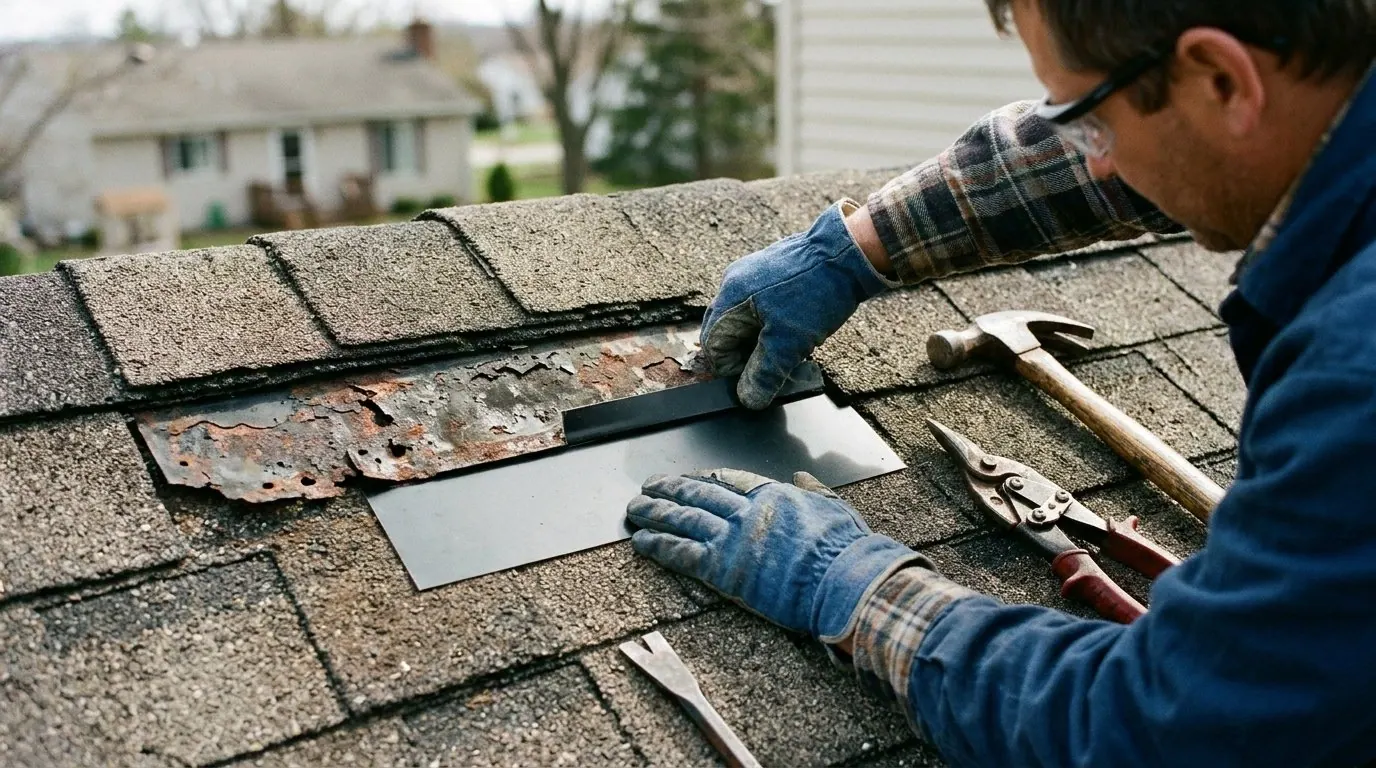
- Flashing pulled loose around a chimney, skylight, or vent pipe
- One small leak with no spreading stains in the attic
- Rust spots on fasteners or ridge caps, with no holes or flaking metal
- A roof under 15 years old sitting on solid decking
In those cases, a targeted roof repair can add years to the roof you already have. Handling it early also keeps water off the decking, and that is the single thing that turns a small bill into a large one.
When Replacement Saves You More Money
Replacement wins once damage keeps coming back or spreads past one area. Roofers generally point to two thresholds: damage covering about a quarter of the roof surface, or a repair quote that climbs toward half the cost of a new roof.
Repeat leaks are the clearest signal of all. When water shows up in more than one place, the underlayment beneath your shingles is usually breaking down, and no amount of flashing work fixes that. A full roof replacement also lets you upgrade to corrosion resistant flashing and fasteners, which matters a lot more here than it does for homes inland in San Jose or Los Gatos.
Storm Prep Before the Rain Picks Up
November is the moment to get ahead of this, because our wet season runs on atmospheric rivers. Researchers at Scripps Institution of Oceanography found these storms deliver up to 65% of Northern California’s annual precipitation, and they tend to arrive in short, heavy bursts that drive water sideways under shingle overlays.
Checking your roof now finds loose seals, clogged valleys, and lifted shingles while they are still cheap to fix. Wait, and you are dealing with wet insulation and stained ceilings instead. A professional roof inspection is the simplest way to head into the season knowing exactly where you stand, and our rundown of what to watch for before the rainy season covers what you can safely spot yourself from the ground.
What a Good Coastal Roof Evaluation Covers
A proper evaluation looks well past the shingles you can see. Ask that it include:
- A close look at flashing, fasteners, and ridge caps for rust and lifted edges
- A check of valleys and gutters for debris and trapped water
- A decking check in any area with a past leak or soft spot
- A written breakdown of both repair and replacement options, with pricing for each
Push for that last one in writing. Once you can see both numbers side by side, the decision usually makes itself.
FAQs About Coastal Roof Repair
1. Does salt air hurt shingles or just the metal parts?
Both, but metal goes first. Flashing, fasteners, and ridge caps corrode in salty, humid air much faster than shingle material wears out, so they should be the first thing your roofer checks on a coastal home.
2. How do I know if the decking under my shingles is still good?
You often cannot tell from the surface. Soft spots underfoot, sagging between rafters, and water stains in the attic all point to decking damage, and a roofer can confirm it by lifting shingles in the suspect area.
3. How often should a coastal roof be checked?
Once a year at a minimum, ideally in fall before the first big storms. Salt air speeds up wear, so a yearly check catches problems while they are still a repair.
4. Can a small leak wait until spring?
It rarely pays off. One winter of stormwater reaching your decking can turn a simple flashing fix into a decking and insulation job.
Get a Straight Answer About Your Roof
Your roof just came through another year of fog, salt, and wind. Before the rain picks up, it is worth knowing whether you are looking at a quick fix or a bigger project this winter. Redwood Roofing has worked on homes throughout Capitola and the Santa Cruz County coast since 2016, and you will get an honest read either way. Call (831) 888-7790 to set up a free estimate.